




Stress, Adaptation & Thriving in the New Year
As we step into a new year, many of us carry an unspoken hope: that life might feel a little more spacious, a little more balanced, and a lot less demanding. Yet stress in its many forms – physical, emotional and environmental, has a way of following us across the threshold. The question is not whether stress will arise - but rather how we meet it.
One of the great pioneers of our modern understanding of stress was endocrinologist Hans Selye, who introduced the concept of the General Adaptation Syndrome. Selye taught us something profoundly important: stress itself is not the enemy. It is our body’s response to stress and our capacity to adapt that determines whether we break down or become stronger.
Selye described three stages of stress: Alarm, Resistance, and Exhaustion.
In short periods of stress, the body mobilizes intelligently, adapts, and returns to balance. Over time, however, ongoing stress without sufficient rest or support may challenge the body’s ability to maintain normal function, which can affect physical and mental well-being.
Longstanding wellness traditions recognized the importance of resilience and balance well before modern science provided terminology to describe stress responses. Today, many people look to botanicals and traditional wellness practices as part of a holistic approach to supporting the body’s natural ability to adapt to everyday stressors.*

In Naturopathic tradition, health is defined not as the absence of stress, but as the body’s inherent ability to self-regulate and adapt. This adaptive intelligence we often call the Vital Force requires nourishment, rhythm, and resilience.
In Ayurveda tradition, stress reflects disturbances in the nervous system and depletion of ojas, the essence of vitality and immunity. When ojas is strong, the mind remains calm and steady even amid challenge. When it is depleted, anxiety, fatigue, and overwhelm may arise.
In Chinese tradition, stress constrains the smooth flow of Qi, particularly Liver Qi. Over time, stagnation gives way to depletion—leaving us reactive, fatigued, and disconnected from our center.
Across all traditions, the message is the same: We must support the body’s adaptive capacity and build resilience.
This is where the wisdom of adaptogenic herbs becomes essential.
At Kokora, our Regenerative Stress Support™ formula was crafted with this exact intention - to select a unique combination of adaptogens that nourish resilience, modulate the stress response, and help the body return to equilibrium rather than push through exhaustion. Adaptogens don’t force the body in one direction; they help the body respond appropriately when it is stressed.

Regenerative Ashwagandha™, delivers a minimum of 6 mg of total withanolides per serving, and contains one of Ayurveda’s great Rasayana herbs, Ashwagandha, which is deeply restorative to the nervous system and adrenals.* It supports calm energy and emotional steadiness without dulling the mind.* It helps teach us how to be strong without being rigid.

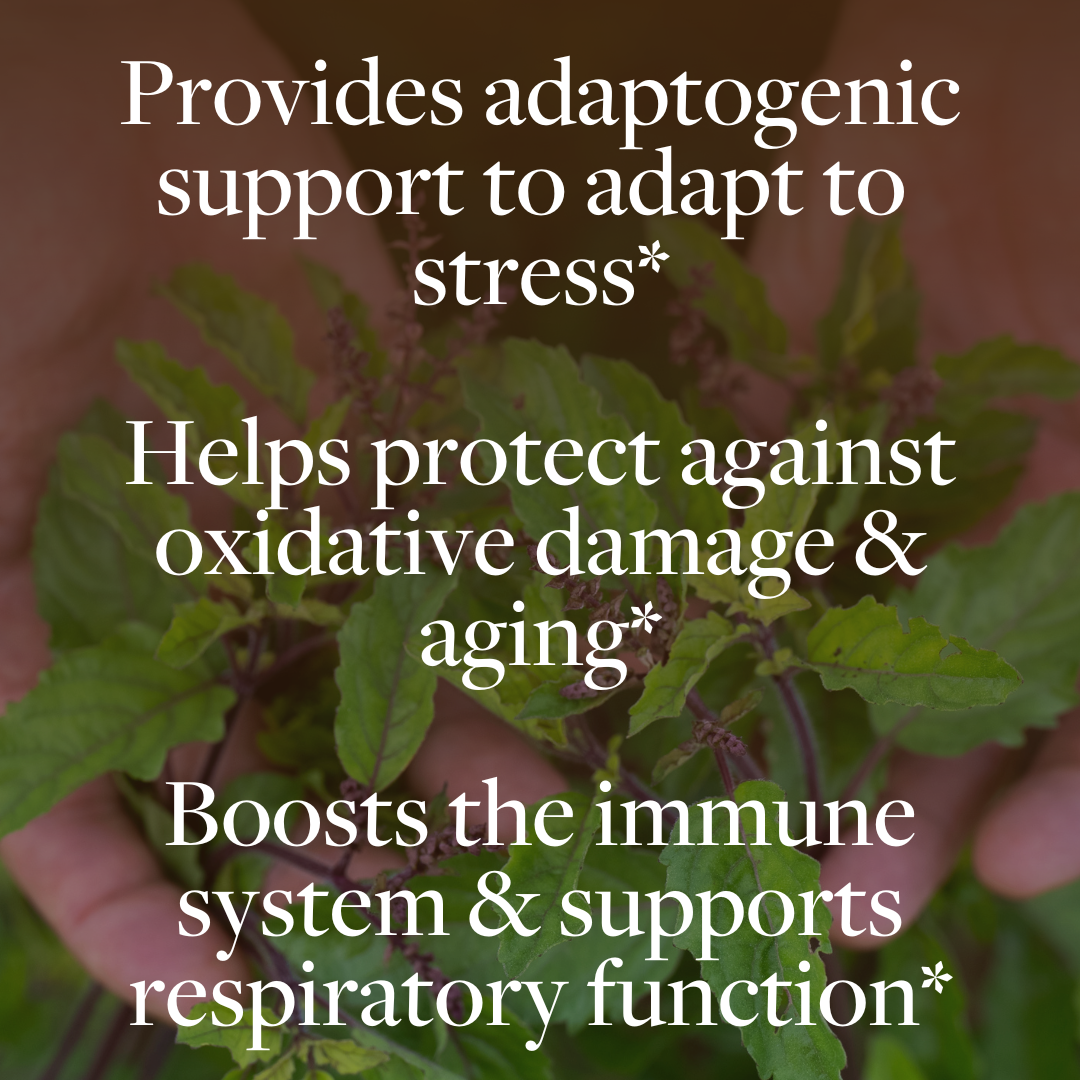
Regenerative Holy Basil™ containing Holy Basil, also known as Tulsi, is revered as a sacred plant for good reason. It uplifts the spirit while calming the nervous system, supporting clarity, resilience, and a grounded sense of optimism.* Tulsi reminds us that adaptation is not only physical, it is emotional and spiritual as well.

As we move into the New Year, I invite you to reframe your relationship with stress. Rather than asking, ‘How do I eliminate it?’ ask instead, ‘How do I strengthen my capacity to adapt, recover, and thrive on the other side of it?’
When we nourish the nervous system, honor natural rhythms, and work with adaptogenic plants, stress can become a teacher rather than a burden.*
May this year be one of deeper resilience, steady energy, and a renewed connection to your body’s innate wisdom.





Read more

When we speak about Energy, we are not talking about stimulation, the borrowed spark of caffeine or the artificial push that leaves us depleted later. True energy is regenerative. It is the quiet, ...

When we speak about memory, cognition, and the vitality of the mind, traditional wellness systems throughout history return us to the same essential truth: a resilient mind is rooted in a healthy b...

